Epithalon 50 mg
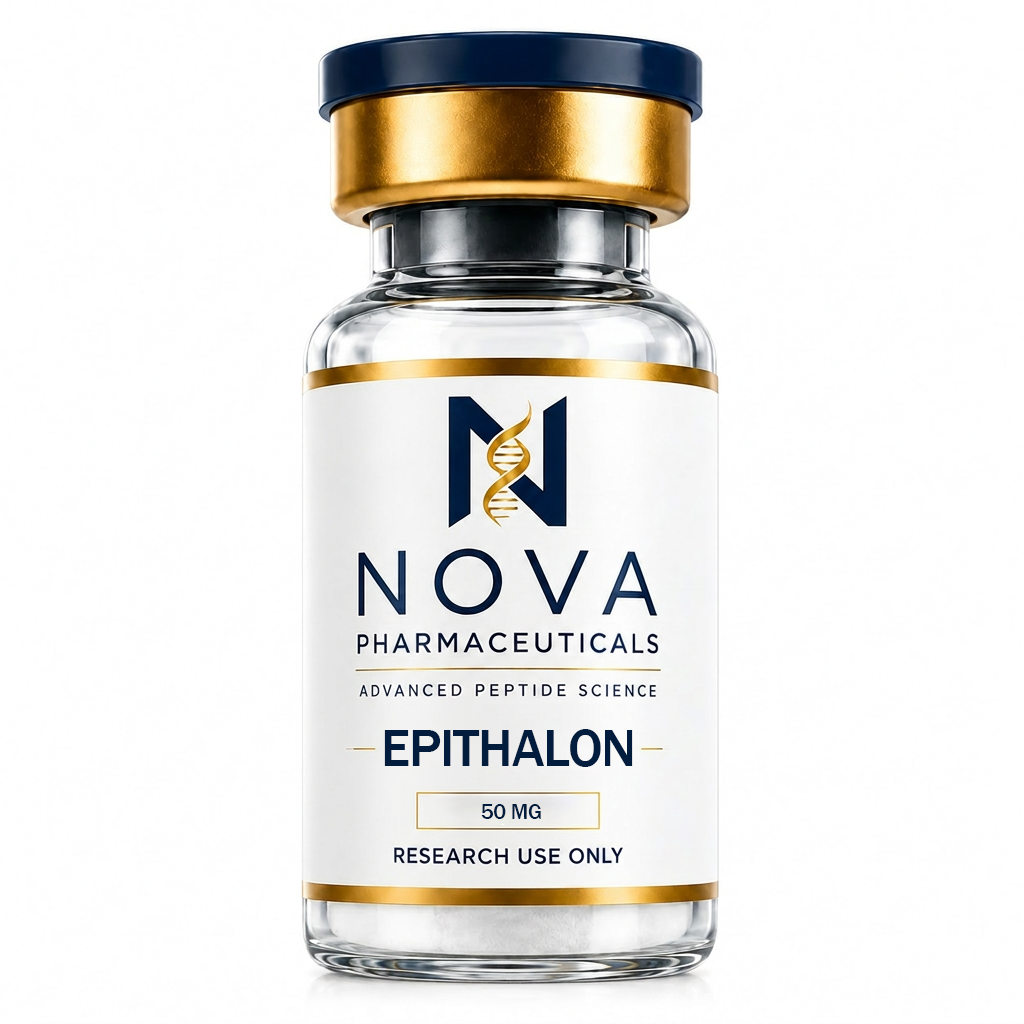
Epithalon 50 mg
$ 84
Epithalon 50 mg
COA & TESTING
Find your batch COA to review available test results.
Browse our public COA library—no login needed.
| Title | Range | Discount |
|---|---|---|
| 5% Off | 5 - 9 | 5% $ 80 |
| 10% Off | 10 - 100 | 10% $ 76 |
SKU
ET50
Category Cellular & Immune Research
US-Based
Support
US-based support available Monday - Friday 7-6pm ET
Volume
Discounts
Volume Discounts available on select products
Verified
Quality
Supported by a Certificate of Analysis.
Research
Focused
Intended for laboratory research applications.
Peptide Research Overview
Peptides are short chains of amino acids studied for their role in cellular signaling and molecular interactions. In research settings, they are commonly used to explore biological pathways and structure–function relationships.
Across scientific disciplines, peptide research supports advances in biochemistry and molecular biology. Their precision and adaptability make peptides essential tools in modern laboratory research.
Key Benefits of Peptides in Research
Support precise investigation of cellular signaling pathways
Enable targeted structure–function research at the molecular level
Offer high specificity for controlled experimental design
Adapt easily across a wide range of research applications
Aid in studying protein interactions and biological responses
Allow consistent and repeatable laboratory testing
Integrate well with modern analytical and research methods
Serve as foundational tools in biochemical and molecular research

Advancing Scientific Research with Peptides
Peptides continue to serve as essential components in modern research due to their flexibility, precision, and well-defined structures. In laboratory settings, researchers rely on peptides to examine biological mechanisms, evaluate molecular interactions, and refine experimental models with a high level of control. Their scalable nature and compatibility with advanced analytical techniques make peptides valuable across both foundational studies and ongoing research development, supporting consistent, reproducible outcomes in controlled scientific environments.

Frequently Asked Questions
› 1. What is Epithalon?
Epithalon, also called Epitalon or Epithalone, is a synthetic tetrapeptide composed of four amino acids: alanine, glutamic acid, aspartic acid, and glycine, commonly abbreviated as AEDG.
› 2. Is Epithalon the same as Epitalon?
Yes. Epithalon and Epitalon are alternative spellings used for the same AEDG tetrapeptide in scientific and research literature.
› 3. What is Epithalon studied for in research?
Researchers have investigated Epithalon in experimental studies involving telomerase activity, telomere biology, gene regulation, cellular aging, and neuroendocrine signaling. These findings describe research contexts rather than established therapeutic effects.
› 4. What is the relationship between Epithalon and telomerase research?
Laboratory studies have reported increased telomerase activity and changes in telomere length in certain cultured human cell models exposed to Epithalon. More recent cell-line research has also investigated hTERT expression and telomere-related pathways.
› 5. How many amino acids are in Epithalon?
Epithalon is a tetrapeptide, meaning it contains four amino-acid residues. Its sequence is commonly represented as Ala-Glu-Asp-Gly (AEDG).
Advanced Peptide Science
Advancing peptide research through uncompromising quality, innovation, and dedication to the scientific community.
Useful Links
Company
Useful Links
Subscribe Now
Nova Pharmaceuticals P.O. Box 21083 Bakersfield, CA 93390
© 2026 Nova Pharmaceuticals. All rights reserved.
Reviews
There are no reviews yet.