
L-Carnitine 600 mg
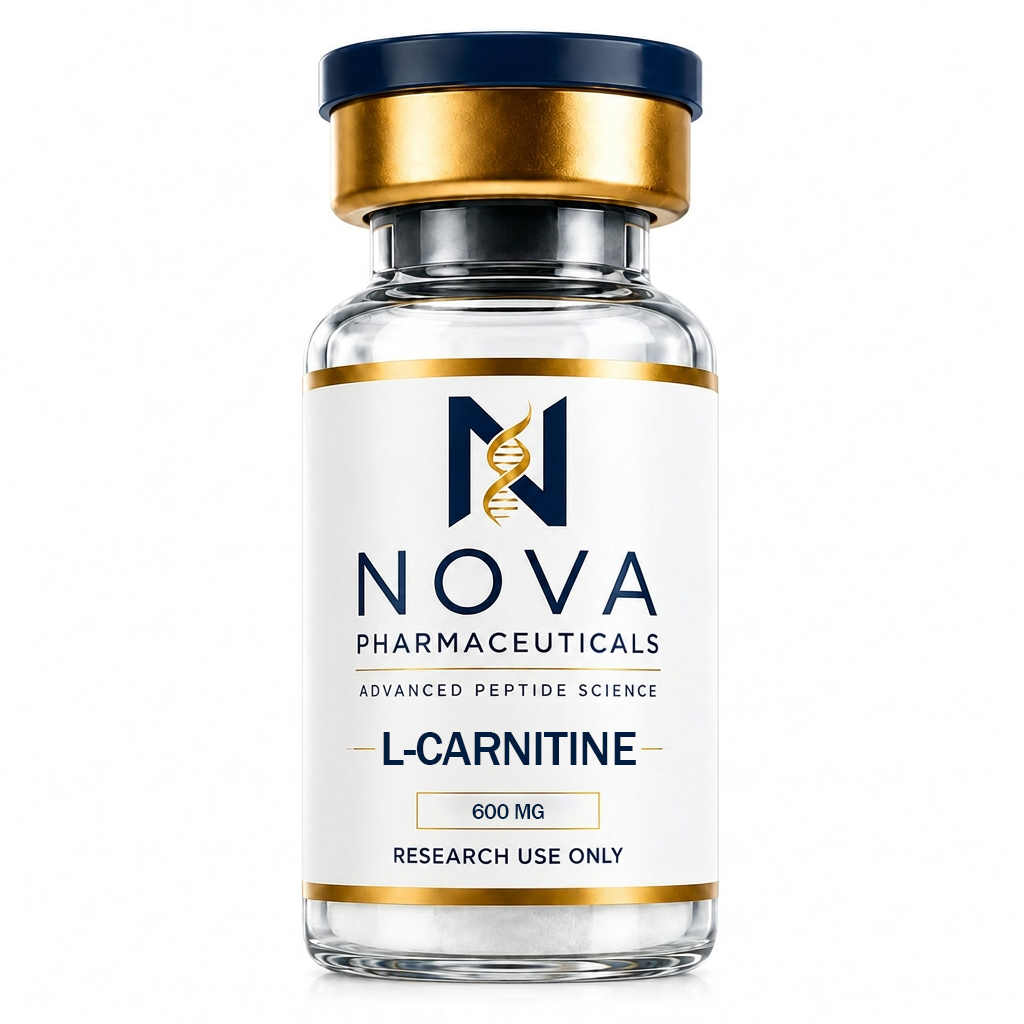
L-Carnitine 600 mg
$ 35
L-Carnitine 600 mg
COA & TESTING
Find your batch COA to review available test results.
Browse our public COA library—no login needed.
| Title | Range | Discount |
|---|---|---|
| 5% Off | 5 - 9 | 5% $ 33 |
| 10% Off | 10 - 100 | 10% $ 31 |
SKU
LC600
Category Other Research Compounds
US-Based
Support
US-based support available Monday - Friday 7-6pm ET
Volume
Discounts
Volume Discounts available on select products
Verified
Quality
Supported by a Certificate of Analysis.
Research
Focused
Intended for laboratory research applications.
Peptide Research Overview
Peptides are short chains of amino acids studied for their role in cellular signaling and molecular interactions. In research settings, they are commonly used to explore biological pathways and structure–function relationships.
Across scientific disciplines, peptide research supports advances in biochemistry and molecular biology. Their precision and adaptability make peptides essential tools in modern laboratory research.

Key Benefits of Peptides in Research
Support precise investigation of cellular signaling pathways
Enable targeted structure–function research at the molecular level
Offer high specificity for controlled experimental design
Adapt easily across a wide range of research applications
Aid in studying protein interactions and biological responses
Allow consistent and repeatable laboratory testing
Integrate well with modern analytical and research methods
Serve as foundational tools in biochemical and molecular research

Advancing Scientific Research with Peptides
Peptides continue to serve as essential components in modern research due to their flexibility, precision, and well-defined structures. In laboratory settings, researchers rely on peptides to examine biological mechanisms, evaluate molecular interactions, and refine experimental models with a high level of control. Their scalable nature and compatibility with advanced analytical techniques make peptides valuable across both foundational studies and ongoing research development, supporting consistent, reproducible outcomes in controlled scientific environments.

Frequently Asked Questions
› 1. What is L-Carnitine?
L-Carnitine is a naturally occurring quaternary ammonium compound derived from amino acids. It plays an important biochemical role in transporting long-chain fatty acids into mitochondria for cellular energy metabolism.
› 2. Is L-Carnitine a peptide?
No. L-Carnitine is not a peptide. It is a small organic compound involved in cellular metabolism and differs structurally from amino-acid-chain peptides.
› 3. What is L-Carnitine studied for in laboratory research?
L-Carnitine is commonly studied in relation to mitochondrial function, fatty-acid transport, cellular energy metabolism, oxidative processes, and metabolic biochemistry.
› 4. How is L-Carnitine related to mitochondria?
L-Carnitine participates in the carnitine shuttle system, which helps move long-chain fatty acids across the inner mitochondrial membrane. This makes it important in research involving energy production and lipid metabolism.
› 5. What analytical details are important for L-Carnitine research material?
Important specifications may include compound identity, concentration, chemical form, purity, lot number, storage requirements, analytical testing method, and batch-specific documentation.

Advanced Peptide Science
Advancing peptide research through uncompromising quality, innovation, and dedication to the scientific community.
Useful Links
Company
Useful Links
Subscribe Now
Nova Pharmaceuticals P.O. Box 21083 Bakersfield, CA 93390
© 2026 Nova Pharmaceuticals. All rights reserved.
Reviews
There are no reviews yet.